Opinion: Unpacking Minister Ramokgopa's electricity sector plan for the year ahead

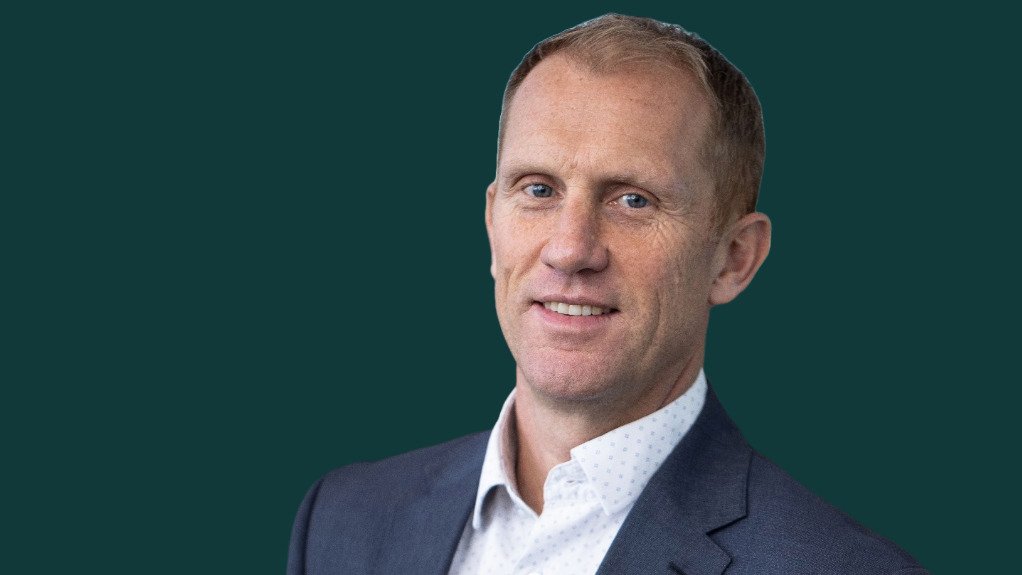


In this article, Energy Council of South Africa CEO James Mackay provides a breakdown of the budget vote presented by Electricity and Energy Minister Kgosientsho Ramokgopa in Parliament earlier this month.
South Africa’s 365 days without loadshedding is a milestone worth celebrating. It shows what can be achieved through focused collaboration. Tabling his budget vote in Parliament on Tuesday 12 May, Minister Ramokgopa, however, made it clear that stabilising generation is only the first step towards broader reform implementation and enabling economic growth.
The Minister outlined five strategic priorities for the Department for 2026/27 as follows: risk-adjusted and integrated energy planning; accelerated grid expansion; the wholesale market implementation; accelerating investment across an integrated technology stack and finally pricing and distribution sector reform. These reflect the critical issues currently shaping the sector and are welcomed by the Energy Council as important focus areas for advancing a more coordinated and resilient energy system.
With focus now on system integration and the Ministers call for a year of “execution discipline”, three themes are evident that help frame what we can expect in the year ahead.
Strengthening reform integration and planning governance
Minister Ramokgopa describes the Integrated Resource Plan (IRP) 2025 as a "living system instrument" that must be continuously tested against real life system dynamics that indicate what is actually feasible for the country. "South Africa cannot plan its energy future on assumptions that are not tested against reality," he said. This approach bodes well for a cabinet approved IRP update in 2027 and an important departure from the history of long periods between overly theoretical policy ambition that stalls real-time investment decisions.
In line with the government objective of building a capable and ethical state, the Minister announced the restructured organisational design of the department and establishment of a Strategic Projects Management Office (SPMO) to provide reporting and oversight across sector activities. This will strengthen the sequencing of reform actions, the energy investment pipeline and act as a “control tower” to coordinate effective delivery across government programmes and state-owned entities. Nersa's regulatory oversight and SANEDI's role in policy-linked energy research are being sharpened under the same institutional logic.
This will be critical to addressing historic weaknesses in coordination and reporting at a critical time when reform actions are increasingly at risk of becoming misaligned, potentially driving up system costs against already strained affordability levels.
Transparent and accurate data, a single version of the truth and accountability are critical to creating confidence and proper sequencing of actions; the key issue will be if the new Department SPMO has the requisite authority and capacity to make a real impact on delivery and accountability.
Accelerating infrastructure and technology investment
The crux of the reform challenge is our ability to deliver a mega-investment ambition of over R2 trillion in the next 10 years on modernising and transitioning our electricity system. The numbers are significant: the Transmission Development Plan targets R440 billion alone.
The Independent Transmission Projects Procurement Programme (ITPPP) is designed to crowd in private capital into high-congestion grid corridors while the state retains ownership and oversight. The Minister has been explicit: South Africa's central lesson from the crisis is that "there can be no energy transition without transmission expansion."
On the supply side, the technology portfolio is deliberately broad. The IRP 2025 accommodates renewables (anchored in the Northern Cape, Western Cape and Eastern Cape corridors), gas (including LNG import terminals at Richards Bay), coal fleet transition, storage and nuclear. A particularly important announcement is the Department’s move on coal fleet planning from a station-by-station approach to a 20-year national programmatic outlook.
This approach will support the sustainable retirement of coal plants while also creating repurposing and repowering opportunities as well as investment to revitalise communities. With the looming expiry of legal permitting on five stations in 2030, such increased visibility and coordinated planning is needed.
The Koeberg licence extension and investment at Pelindaba signal that nuclear is being repositioned not just as baseload but also as an industrial and innovation platform, including medical radioisotopes, advanced materials and uranium beneficiation.
The South African Wholesale Electricity Market (SAWEM) is intended to strengthen investor confidence within a more decentralised electricity system. The Minister described it as introducing clearer price signals, improving dispatch efficiency and reducing long-term reliance on the single-buyer model, while being emphatic that market reform does not mean the state is retreating from the electricity sector. South Africa is implementing a hybrid market structure that combines regulated and competitive elements, while retaining a central role for the state in system operations and coordination.
While applauding the balanced views of the Minister, the real success will be consistent phasing and transparency that builds price confidence and participation over the coming year. With both the wholesale tariff and vesting contract papers released by Nersa for public comment, the process is moving forward in line with the department roadmap. Transparency and collaboration is improving but must continue to do so, along with regulatory oversight and market surveillance.
Social impact and local industrialisation
The third pillar goes beyond technology and market instruments. The Minister strongly emphasised that the energy transition is only legitimate, and only sustainable if it translates into tangible socio-economic outcomes. This must deliver inclusive growth and jobs for South Africans but also reliable local distribution networks and access for low-income and marginalised communities.
South Africa’s transition must drive localisation, industrial growth, skills development and local ownership by aligning energy planning and investments with domestic manufacturing and infrastructure development.
The South African Renewable Energy Masterplan (SAREM) was outlined by the Minister as the industrialisation instrument and he signalled that future bid windows will impose stricter economic development obligations, with measurable targets for local manufacturing, skills development, enterprise support and community-based contracting.
The pricing and affordability dimension carry particular risk. The Electricity Pricing Policy is being processed for Cabinet submission ahead of public consultation and is expected to reshape how electricity is priced, funded and protected across the system, balancing the need for financial sustainability with affordability and social protection considerations.
Getting this right is arguably the most politically consequential task in the energy reform agenda. Eskom's municipal arrear debt has grown to just over R100 billion at approximately R3 billion per quarter. This is structural revenue leakage that, if not arrested, undermines the entire investment case for distribution reform.
In conclusion, the Energy Council welcomes the Minister’s budget vote and congratulates the Minister on the passing by members of the portfolio committee. It is a deliberate shift by the Department of Electricity and Energy from the historic siloed structures and short-term crisis response to a longer-term focus on integrated system delivery.
Importantly, the Minister is leading by example through the restructuring of the department to better reflect the rapidly changing environment and system complexity. The architecture outlined by the Minister is coherent, well structured, and gives confidence of an improving policy and planning environment.
The challenge is implementation capacity. Collaboration and partnerships must therefore remain a priority, especially in the light of the geopolitical environment that has sharply impacted our economic growth outlook. Strengthening business confidence will unlock investment, which will create jobs but this has many dependencies, most important of which is strengthening the delivery and accountability of state institutions.
Article Enquiry
Email Article
Save Article
Feedback
To advertise email advertising@creamermedia.co.za or click here
Research Reports
Projects

Latest News
Showroom

Complete range of security sealing solutions including security seals bags and labels.
VISIT SHOWROOM
We are responsible manufacturers of essential components. Manufacturing 80 million parts a week, we have over 1 billion parts in stock.
VISIT SHOWROOM
Announcements
What's On
Subscribe to improve your user experience...
Option 1 (equivalent of R125 a month):
Receive a weekly copy of Creamer Media's Engineering News & Mining Weekly magazine
(print copy for those in South Africa and e-magazine for those outside of South Africa)
Receive daily email newsletters
Access to full search results
Access archive of magazine back copies
Access to Projects in Progress
Access to ONE Research Report of your choice in PDF format
Option 2 (equivalent of R375 a month):
All benefits from Option 1
PLUS
Access to Creamer Media's Research Channel Africa for ALL Research Reports, in PDF format, on various industrial and mining sectors
including Electricity; Water; Energy Transition; Hydrogen; Roads, Rail and Ports; Coal; Gold; Platinum; Battery Metals; etc.
Already a subscriber?
Forgotten your password?
Receive weekly copy of Creamer Media's Engineering News & Mining Weekly magazine (print copy for those in South Africa and e-magazine for those outside of South Africa)
➕
Recieve daily email newsletters
➕
Access to full search results
➕
Access archive of magazine back copies
➕
Access to Projects in Progress
➕
Access to ONE Research Report of your choice in PDF format
RESEARCH CHANNEL AFRICA
R4500 (equivalent of R375 a month)
SUBSCRIBEAll benefits from Option 1
➕
Access to Creamer Media's Research Channel Africa for ALL Research Reports on various industrial and mining sectors, in PDF format, including on:
Electricity
➕
Water
➕
Energy Transition
➕
Hydrogen
➕
Roads, Rail and Ports
➕
Coal
➕
Gold
➕
Platinum
➕
Battery Metals
➕
etc.
Receive all benefits from Option 1 or Option 2 delivered to numerous people at your company
➕
Multiple User names and Passwords for simultaneous log-ins
➕
Intranet integration access to all in your organisation